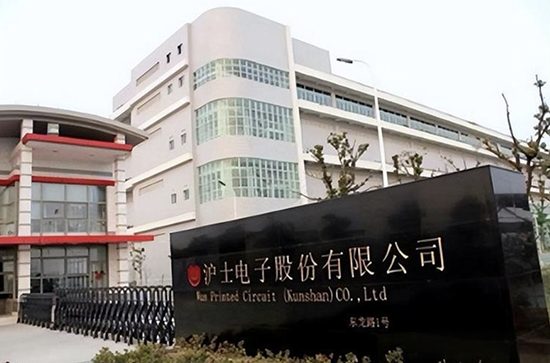
On the evening of January 12, WUS Printed Circuit Co., Ltd. (WUS PCB) issued an announcement stating that it plans to invest $300 million to launch the High-Density Optoelectronic Integrated Circuit Board Project.
As introduced, the project intends to establish a wholly-owned subsidiary in Jintan District, Changzhou City. It will build an incubation platform for cutting-edge technologies such as CoWoP and advanced processes including mSAP, and construct a closed-loop system covering "R&D - pilot testing - verification - application". The project will also lay out next-generation technology routes like optical-copper integration, systematically enhance the product capabilities of signal transmission, power distribution and functional integration. Upon the maturity of relevant technological process verification and satisfaction of industrialization conditions, large-scale production lines for high-density optoelectronic integrated circuit boards will be constructed.
In terms of specific project implementation, WUS PCB plans to set up a wholly-owned subsidiary with a registered capital of $100 million to take charge of the project. The total planned investment is $300 million, to be carried out in two phases:
Phase I-With a planned investment of $100 million, the company will lease approximately 50,000 square meters of existing factory buildings from Schweitzer Electronics (Jiangsu) Co., Ltd. (hereinafter referred to as "Schweitzer Jiangsu"). It will build an incubation platform for cutting-edge technologies such as CoWoP and advanced processes such as mSAP, and construct a closed-loop "R&D - pilot testing - verification - application" system. The project will also deploy next-generation technology directions such as optical-copper integration to systematically improve the product’s signal transmission, power distribution and functional integration capabilities. After relevant technological processes are verified and matured with industrialization conditions met, large-scale production lines for high-density optoelectronic integrated circuit boards will be built.
Phase II-Depending on the incubation results of Phase I and market development demands, an additional investment of $200 million is planned. The company intends to acquire approximately 60 mu of new industrial land and construct a new clean factory building covering around 60,000 square meters. On the basis of Phase I, new production lines will be added to expand the technological upgrading, R&D, production and sales scale of incubated products. If Phase I fails the evaluation or the market environment undergoes major adverse changes, the Party B shall have the right to unilaterally decide to terminate the Phase II investment plan without assuming any liability for breach of contract, and the relevant clauses of this agreement regarding Phase II investment shall be automatically terminated.
It is worth noting that CoWoP (Chip-on-Wafer-on-Platform PCB) is a next-generation packaging solution. Simply put, CoWoP technology is "CoWoS minus the packaging substrate". It directly bonds the combination of silicon wafers and silicon interposers onto a reinforced platform PCB, eliminating the traditional packaging substrate and BGA steps, forming an integrated "chip - silicon interposer - PCB" structure. This achieves thinner, lighter and higher-bandwidth module design while fully leveraging the high capacity and mature processes of large-size PCB production lines.
However, to achieve large-scale mass production of CoWoP, the key lies in breaking through the process that limits traditional circuit precision—mSAP (Modified Semi-Additive Process), an advanced printed circuit board (PCB) manufacturing process mainly applied to advanced process technologies for substrate-like PCBs (SLP) and BT substrates. Different from traditional subtractive etching processes, mSAP adopts an "additive-first-then-subtractive" approach: first, a layer of ultra-thin copper is coated on the base material; then circuit areas are defined through photolithography and selectively thickened via electroplating; finally, the unnecessary thin copper layers are removed to form fine circuit structures. Compared with traditional PCB processes, mSAP can achieve smaller line width/space (L/S), maintain high yield and excellent impedance consistency on large-area substrates, thus meeting the stringent requirements of AI/HPC applications for high-speed signal transmission.
It is evident that WUS PCB’s High-Density Optoelectronic Integrated Circuit Board Project is not just a simple production line, but rather undertakes more tasks of cutting-edge technology development.
According to the introduction, after the full completion and production of the project, WUS PCB is expected to add an annual production capacity of 1.3 million high-density optoelectronic integrated circuit boards, with an estimated annual sales volume of RMB 2 billion and an expected annual pre-tax profit of over RMB 300 million.
(Reprinted from https://news.eccn.com/)