

Industrial scenarios have stringent requirements for the reliability and stability of IC hardware. Industrial control ICs serve as the "brain" of automated production lines, enabling precise control over equipment operating parameters and processes to achieve high-precision manufacturing. For instance, in precision machine tools and robot control, they ensure processing accuracy and motion coordination. Industrial IoT ICs, on the other hand, facilitate device networking, real-time collection and transmission of equipment operation data. Through data analysis and processing, they enable predictive maintenance and production optimization, thereby enhancing industrial production efficiency and intelligence levels.
In automated production lines, the control IC inside the Programmable Logic Controller (PLC) is the core component. Taking Siemens' PLC products as an example, their control ICs can precisely control the operation of production equipment according to pre-programmed procedures. On the welding lines in automobile manufacturing workshops, control ICs regulate the movement trajectory and welding parameters of robotic arms, allowing them to accurately complete welding operations on car bodies. The position error of each weld is controlled within an extremely small range, ensuring the welding quality of automobile bodies. Meanwhile, motion control ICs are used to control servo motors. In CNC machine tools, motion control ICs, based on processing instructions, control motors to drive tools for precise movement, enabling high-precision cutting of complex parts. For example, when processing aero-engine blades, motion control ICs ensure the curved surface accuracy of the blades, meeting the strict performance requirements of the aviation field.
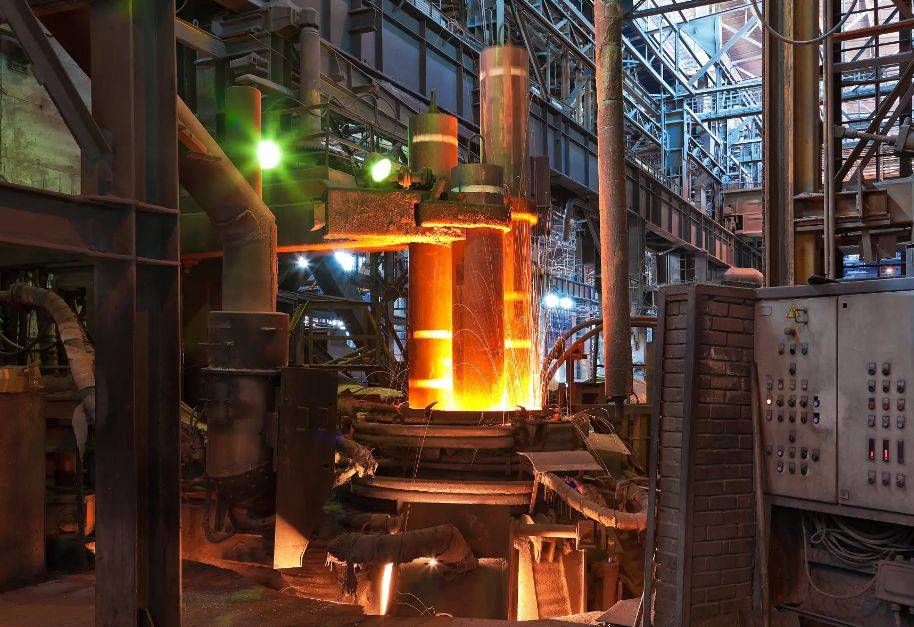
The construction of industrial IoT relies on various communication and data processing ICs. In smart sensor nodes of factories, low-power data acquisition ICs can collect equipment operation data such as temperature, vibration, and pressure. For instance, on blast furnace equipment in large steel plants, installed vibration sensors paired with data acquisition ICs collect real-time vibration data of the blast furnace body, which is then transmitted to cloud servers via industrial IoT networks. Edge computing ICs perform preliminary processing on this data at the factory edge, filtering out abnormal data. For example, when the collected vibration data exceeds the normal range, edge computing ICs quickly analyze and determine whether there is a potential equipment failure, triggering an early warning in advance to allow maintenance personnel to conduct timely inspections, thus avoiding huge losses caused by equipment downtime.
Remote equipment maintenance also relies on IC support. Remote communication ICs enable maintenance personnel to connect to factory equipment from thousands of miles away. By analyzing equipment operation data, they can remotely adjust equipment parameters and update control programs. For example, in GE Intelligent Platforms' remote maintenance solutions, communication ICs ensure stable data transmission, allowing engineers in the group control center to perform maintenance management on industrial equipment distributed in factories across various regions.

QR code

QR code