The global semiconductor memory market is experiencing a price surge. According to the latest Q3 market report released by TrendForce, DRAM contract prices have maintained an upward trend for four consecutive quarters, with the premium for high-frequency DDR5 modules exceeding 20%.
Facing this significant market gap, ChangXin Memory Technologies (CXMT)—China’s leading memory chipmaker known for its low profile—unveiled a series of heavyweight products at IC China 2025, which opened on November 23. From high-speed DDR5 and LPDDR5X chips to a full-scenario module portfolio, the company’s "one-two punch" sends a clear signal: CXMT has completed its strategic leap from "catching up" to "keeping pace," officially engaging in direct competition with the world’s top three memory giants in the high-end market and precisely positioning itself in the high-premium segment.
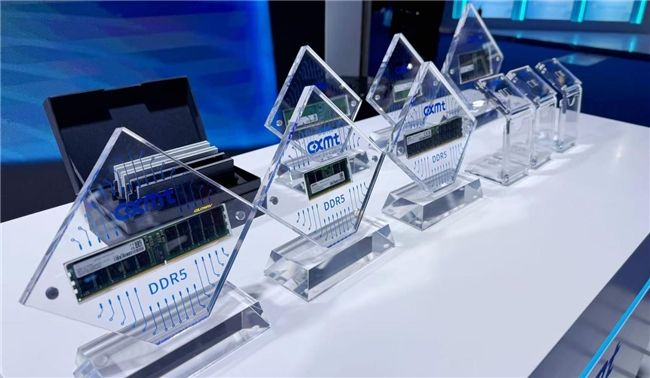
In today’s DRAM market, as the number of CPU cores continues to increase, memory bandwidth has become the biggest bottleneck restricting system performance.
CXMT directly launched its DDR5 8000Mbps solution—a leap not just in numbers, but a direct response to the urgent demand for high computing power. This product marks CXMT’s successful entry into the high-end enthusiast and workstation market, which has long been monopolized by international giants, providing professional users in need of high bandwidth with a highly competitive domestic alternative.
The mobile market is undergoing a hardware revolution driven by "on-device large models." Running AI models with billions of parameters on smartphones places nearly harsh requirements on memory bandwidth.
CXMT’s newly released LPDDR5X 10667Mbps product precisely meets the stringent memory performance demands of next-generation flagship SoCs. It proves that the company has achieved "zero generation gap" competitiveness with global top-tier manufacturers in low-power, high-frequency technology, enabling it to easily handle the explosive computing throughput requirements of AI smartphones and flagship tablets.
Against the backdrop of global supply chain restructuring, OEMs are more eager than ever for safe, stable, and comprehensive product portfolios from partners.
CXMT’s displayed seven module form factors cover a full range from UDIMM and SODIMM to LPCAMM2. This "family bucket" product layout signifies that CXMT has evolved into a memory giant with system-level solution capabilities. Whether for consumer PCs, commercial laptops, or edge computing devices, CXMT can provide a one-stop domestic "optimal solution," significantly reducing downstream manufacturers’ verification costs and supply chain risks.
2025 is regarded as the "first year of AI PCs," and new module standards are reshaping the industrial landscape.
CXMT has achieved "zero-time-lag" synchronization with JEDEC standards and Intel/AMD’s next-generation platforms for CUDIMM, CSODIMM (integrated clock driver), and server-side MRDIMM. Amid the replacement wave driven by AI PCs and data centers, new-type modules have become a key battleground. CXMT’s rapid positioning breaks the traditional 1-2 year lag for domestic manufacturers in adopting new standards, demonstrating high R&D agility and successfully securing the first-mover dividends of next-generation computing platforms.
Behind this series of "heavyweight releases" lies CXMT’s precise grasp of both market pain points and technological commanding heights. It proves to the global industrial chain that Chinese memory enterprises are no longer confined to price competition in the mid-to-low-end market—they have developed core capabilities to define high-end products, serve global top-tier customers, and gain high profits through technological premiums.
In the unstoppable "super cycle" of the memory industry, CXMT is fully equipped to establish a firm foothold in the high-end market.
(Reprinted from https://news.eccn.com/)