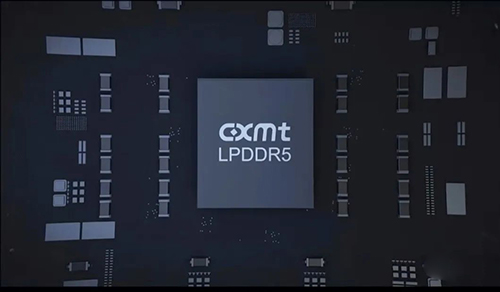
According to industry sources, domestic memory manufacturer ChangXin Memory Technologies (CXMT) has restarted large-scale equipment investment. It plans to introduce a large number of new devices to expand production capacity, aiming to mass-produce the latest DRAM DDR5 and, on this basis, develop HBM3 high-bandwidth memory products.
Sources indicate that CXMT began placing equipment orders in the third quarter to establish production lines at its manufacturing base in Hefei, Anhui Province. Initially, CXMT informed equipment suppliers that it would start purchasing new equipment from the beginning of the year to significantly boost production capacity. However, due to the discontinuation of DDR4 production and potential stricter U.S. export restrictions, the delivery of new equipment was delayed.
It is projected that CXMT's HBM production capacity may reach 50,000 wafers per month by 2026, equivalent to 20%-25% of the combined HBM capacity of Samsung and SK hynix in 2026. In the DRAM market during the first quarter of 2025, CXMT stated that its production capacity already accounted for approximately 6% of the global DRAM market.
Due to U.S. export restrictions on China, access to HBM3 and higher-end HBM products in mainland China is limited. According to a report by the Financial Times, during Sino-U.S. trade negotiations, China has requested the U.S. to relax export controls on HBM.
Against this backdrop, CXMT is also accelerating the localization of HBM. It is understood that CXMT has completed the development of HBM2 and is expediting the development and mass production of HBM3. To this end, CXMT has already halted DDR4 production and is upgrading existing DDR4 equipment to DDR5 production lines. However, the U.S. consideration of adding CXMT to its Entity List has forced delays in the import of its equipment.
Currently, CXMT's HBM R&D still lags significantly behind manufacturers such as SK hynix and Samsung. Samsung and SK hynix are currently producing HBM3e using 10nm-class 1b process DRAM and are preparing to manufacture HBM4 using 1c process DRAM. Market insiders note that it will take a considerable amount of time for CXMT's HBM products to achieve commercialization and enter the market, and their impact on the 2026 HBM market will be limited.
(Reprinted from China Grid https://news.eccn.com)