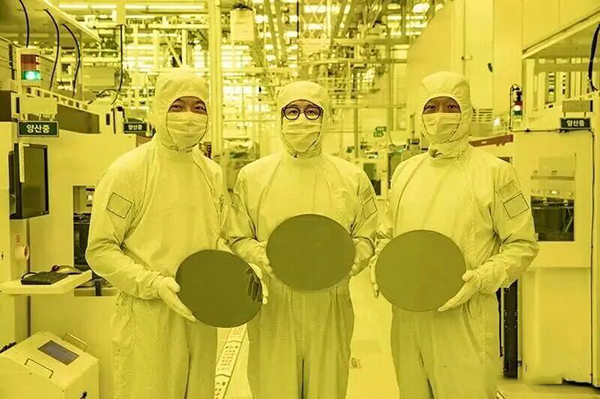
According to Korean media outlets including The Korea Herald and ZDNet Korea, Han Jin-man, head of the foundry division under Samsung Electronics’ Device Solutions (DS) business unit, stated during a recent internal briefing that Samsung Electronics’ foundry business is unlikely to achieve profitability even in 2027, with 2028 being a more realistic timeline for returning to the black.
Earlier reports from The Chosun Ilbo indicated that Samsung’s internal projections targeted a turnaround for its foundry division as early as the third quarter of 2026. This would mark the segment’s first return to profitability in roughly four years after posting operating losses amounting to several trillion South Korean won starting in 2022. South Korean securities firms also previously forecasted that Samsung’s non-memory divisions, covering foundry and System LSI, would log operating losses ranging from KRW 2 trillion to KRW 3 trillion (approximately USD 1.33 billion to USD 2 billion) in 2026, with profitability possible as soon as 2027.
However, Han Jin-man tempered such upbeat outlooks during a recent internal management briefing for foundry staff. “It looks challenging for our foundry business to turn profitable next year,” he remarked, noting that profitability in 2028 is far more probable. Disclosures show orders for Samsung’s 2nm process are set to rise by around 130%. While Samsung clearly aims to address long-standing market doubts over its yield performance and reliability via mass production of its next-generation node, the pushed-out profitability schedule underscores substantial ongoing headwinds.
When elaborating on the missed profitability trajectory, Han cited the newly introduced Special Management Performance Bonus Scheme as one contributing factor. Established under a recent labor-management agreement at Samsung Electronics, the incentive pool is funded by 10.5% of the semiconductor division’s operating results, with post-tax payouts issued entirely in treasury stock.
Han explained that cost burdens stemming from these special performance bonuses, alongside structural challenges, will sustain losses through this year and next. Such structural hurdles include lingering overreliance on mobile-centric business architecture, insufficient technological maturity, an unprofitable order mix, and suboptimal operational strategies for mature process nodes.
Notably, Han did not propose eliminating performance bonuses outright to accelerate profitability, warning that the measure carries clear dual-edged effects: while incentive pay motivates employees to boost production output and yield rates, it simultaneously erodes overall corporate profits.
Faced with profitability pressures, Samsung Foundry is rolling out strategic adjustments. Though its 8-inch foundry operations remain profitable today, Han disclosed plans to gradually scale down this business, explaining that “the market has become increasingly saturated and entirely price-driven.”
Concurrently, Samsung is redirecting greater resources toward cutting-edge process technologies, seeking breakthroughs in high-margin advanced nodes plagued by capacity shortages. Han revealed the company is constructing a 2nm manufacturing plant in Taylor, Texas, USA, scheduled to launch trial operations by the end of this year and commence mass production for key clients including Tesla starting next year. Samsung previously secured a USD 16.5 billion contract with Tesla for manufacturing its next-generation AI chips, and also produces Groq’s Language Processing Units (LPUs) built on NVIDIA’s platform.
While steady improvements in yield for Samsung’s 2nm GAA technology, paired with rising capacity utilization across its more mature 4nm and 8nm nodes, are gradually steering the foundry segment toward profitability, industry consensus holds that Samsung is still not viewed as a direct top-tier rival to TSMC by the market, often positioned by customers solely as a secondary or backup capacity supplier. To meaningfully capture major client orders away from TSMC, industry observers believe Samsung must lift advanced process yields to approximately 70% at minimum.
Han also voiced resolve to drive profit growth via business restructuring. “Management bears ultimate accountability for sustained losses,” he stated, emphasizing the priority of rebuilding business competitiveness. He added that the company will work to raise compensation packages so employees can reap tangible rewards tied to operational performance gains.
(Reprinted from https://news.eccn.com/)