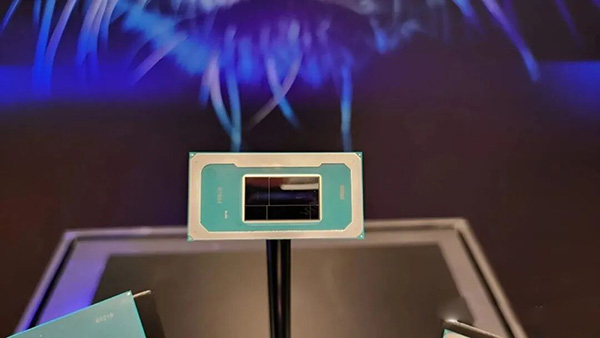
Citing multiple industry insiders, Nikkei Asia reported that chip giant Intel is putting substantial pressure on PC manufacturers worldwide to massively adopt its latest Intel 18A process-based processors, warning that suppliers may cut off shipments of older-generation chips for uncooperative clients.
Intel has made it clear to major PC partners across the United States, Chinese mainland and Chinese Taiwan that the supply of its 18A-processed Panther Lake (Core Ultra Series 3) and Wildcat Lake (Core Series 3) processors is far more sufficient than that of legacy products. Meanwhile, the company has practically frozen additional supply of consumer-grade CPUs built on the mature Intel 7 process, including 12th to 14th Gen Core series such as Alder Lake, Raptor Lake and Arrow Lake.
The move stems from massive occupation of advanced process capacity driven by booming AI demand. A senior executive from a consumer PC manufacturer stated plainly that CPUs for industrial and server applications boast roughly 20% higher profit margins than consumer counterparts. Intel has prioritized its constrained Intel 7 production capacity for these high-profit segments, leaving PC vendors with almost no access to extra allocations of older chips.
Such supply policies have forced PC makers into a take-it-or-leave-it dilemma. For instance, one manufacturer placed an order for 100 Intel 7 processors but only received 30 units, among which 10 were unordered 18A chips. They were even informed that any refused allocations would be reassigned to other willing buyers. To secure sufficient CPU supplies for steady production, PC manufacturers have no choice but to adopt the higher-cost Intel 18A platforms.
This shift has brought severe cost and design burdens to PC builders. Industry insiders revealed that previous limited launches of 18A-equipped models were mainly out of strategic coordination with Intel. These high-priced, high-end chips have seen rather sluggish market demand. Now manufacturers are compelled to roll out more 18A-based products or face supply shortages. Migration to new platforms leads to sharp increases in overall product costs. Apart from pricier CPUs, vendors need at least three months to complete new product redesign and verification, and are also required to upgrade displays, sensors and other components to justify premium pricing positioning.
Hsu Hsien-yue, Co-CEO of ASUS, the world’s fifth-largest PC brand, confirmed in a recent earnings briefing that the company has strategically prioritized shipments of high-end models amid ongoing shortages of CPUs and memory chips.
Surging costs of DRAM and NAND flash chips, rising expenses for semiconductor raw materials and advanced wafer fabrication services, plus CPU price hikes fueled by structural AI demand, have pushed PC manufacturers into unprecedented cost pressure. Analysts at Counterpoint Research predicted that overall global PC demand may drop by over 15% year-on-year due to soaring component costs.
This supply-side-driven premiumization trend indicates that newly launched personal computers will maintain relatively high price levels going forward. For Intel, this strategy helps accelerate market penetration of its cutting-edge 18A process nodes, lift average selling prices of client-side processors, recoup massive investment in 18A technology and improve overall financial performance. Nevertheless, excessive cost burdens and narrow product choices have frustrated its PC partners, and may drive some manufacturers to turn to alternative solutions from rivals such as AMD.
According to the latest data released by Mercury Research on May 12, 2026, AMD achieved remarkable breakthroughs in the x86 CPU market in Q1 2026. Its revenue share in server CPUs hit a record high of 46.2%, and its overall share in the full x86 CPU market crossed the 30% threshold for the first time, rising 5.6 percentage points year-on-year, posing fierce competition against Intel in both core business segments.
In response, Intel stated that its 3rd-gen Core processors built on Intel 18A process are strategically vital for its clients. The company is scaling up mass production steadily to deliver upgraded performance and comprehensive AI-enabled features to all industry partners.
(Reprinted from https://news.eccn.com/)