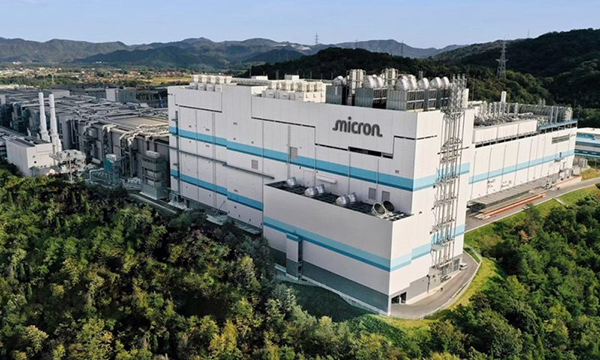
Recently, Sanjay Mehrotra, Chairman and CEO of memory chip giant Micron Technology, warned in an interview with CNBC that the development of artificial intelligence is still in its “first innings”, yet memory chip supply has already become “extremely tight” with no quick way to ramp up production capacity rapidly. His remarks, combined with Micron’s record-breaking financial results released earlier, have sounded the alarm over deepening supply-demand imbalance across the technology industry.
Mehrotra pointed out that memory has evolved into a strategic asset, and unlocking AI’s full potential requires larger-capacity and higher-speed memory solutions. The industry is now at an inflection point where AI demand is shifting from model training to inference workloads. As inference applications expand, the volume of generated tokens will surge rapidly. These tokens demand high-speed processing, calling for more and faster memory to fully unleash AI capabilities.
Mehrotra also acknowledged that current memory supply remains severely constrained, and production capacity cannot be expanded easily or quickly — a trend already reflected in the company’s financial performance.
As GPUs continue adopting newer, higher-density HBM standards, upcoming products such as Vera Rubin and MI400 will support HBM4, delivering both elevated bandwidth and record-breaking capacity while setting benchmarks for next-generation HBM solutions. Meanwhile, the growth of agentic AI workloads has driven DRAM demand to outpace supply continuously, with CPU memory capacity requirements climbing as high as the 400GB level. Thanks to its high energy efficiency, LPDDR has also become a preferred choice for large-scale AI deployment.
“In the AI era, memory has turned into a strategic asset for our customers,” said Mehrotra. “We are investing in our global manufacturing footprint to support rising demand.”
Micron has unveiled an aggressive capital expenditure plan: capital spending will reach $25 billion in fiscal 2026, with an additional over $10 billion earmarked for fiscal 2027 to expand production capacity across the United States, Japan, India, Singapore and other regions worldwide.
Mehrotra stated that such investment is indispensable. Without investing now, the company will be unable to capture dividends from the upcoming AI boom.
Although Micron is actively expanding DRAM production capacity, new capacity will not begin shipping until the end of 2027 at the earliest, leaving the DRAM supply shortage to persist through 2027. Insufficient production capacity of certain semiconductor equipment is another key factor prolonging the imbalance.
Equally notable is the shift in business models. Departing from its traditional one-year supply agreements, Micron has for the first time signed five-year Strategic Customer Agreements (SCA) to secure long-term capacity and supply commitments. This indicates that major AI clients including cloud vendors and GPU suppliers are willing to commit multi-year order volumes amid supply concerns, transforming memory demand from a short-term market theme into long-term structural growth.
Booming enterprise-grade AI demand is squeezing memory supply for consumer electronics. Micron forecasts that constrained supply and rising prices may lead to a low double-digit decline in overall shipments of PCs and smartphones in 2026.
Nevertheless, this trend benefits per-device memory content. The recommended memory configuration for AI PCs has risen from 16GB to 32GB, becoming the mainstream standard. The proportion of flagship smartphones equipped with more than 12GB of DRAM has also surged from less than 20% one year ago to nearly 80%. Massive memory demand from high-end AI devices has instead lifted average industry selling prices.
Looking ahead, Mehrotra highlighted two long-term growth drivers: autonomous vehicles and robots. He believes DRAM installation capacity in L4 autonomous vehicles will jump from around 16GB previously to over 300GB, nurturing a huge automotive-grade memory market. Humanoid robots are poised to enter a 20-year growth cycle, with computing platform memory demands comparable to those of high-end autonomous vehicles.
(Reprinted from https://news.eccn.com/)