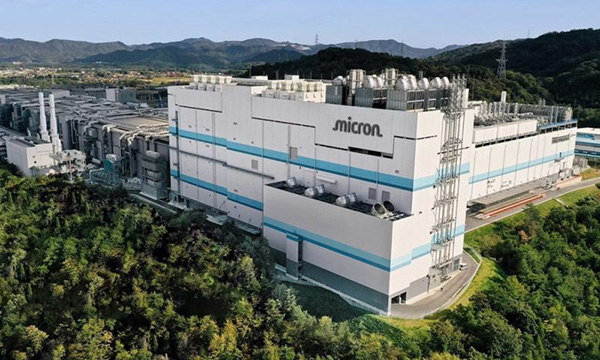
Foreign investment bank Morgan Stanley disclosed in a recent research report tracking memory chip giant Micron Technology that senior executives including Micron Chairman and CEO Sanjay Mehrotra stated at an investor meeting that although Micron is actively expanding DRAM production, new capacity will not ship until the end of 2027 at the earliest. As a result, the DRAM supply shortage will persist until 2027, with another key factor being insufficient capacity of certain semiconductor manufacturing equipment.
Currently, surging demand for high-bandwidth memory (HBM) driven by AI chips remains the critical bottleneck causing supply shortfalls across the entire DRAM market. Micron achieved its target in the third quarter of 2025 where HBM bit market share matched its overall DRAM market share. The company also expects HBM prices, costs and profit margins to rise further following the introduction of custom logic base chips in its future HBM4E and HBM5 products. This is because the ratio of DRAM capacity consumed during the transition from HBM3E to HBM4/5 could reach as high as 4:1, compared with the previous 3:1 ratio. Furthermore, earlier data shows that the yield rate of HBM produced via DRAM stacking currently stands at only around 50% to 60%, exacerbating the overall supply-demand imbalance in DRAM.
To adapt to this structural shift, the growth of AI and data centers has made DRAN a strategically important asset. Micron recently launched Strategic Customer Agreements (SCAs) and has signed a five-year long-term contract to ensure appropriate return on invested capital (ROIC) for capital expenditures, demonstrating operational resilience distinct from previous industry cycles.
On financial metrics, Micron’s gross margin guidance for the latest quarter reaches as high as 81%, with management setting a long-term target in the mid-80% range. Despite recent market concerns over falling spot DRAM prices and rumors of excess shipments, Micron believes these factors will have limited impact and optimistically forecasts earnings per share (EPS) to reach at least $100 by 2027.
In terms of capacity expansion plans, to support the manufacturing of HBM and advanced-process DRAM, Micron has significantly raised its capital expenditure forecast. Capital expenditure is expected to reach $25 billion in fiscal 2026 and exceed $37 billion in fiscal 2027, with plans to equip all production lines with EUV capabilities. Although Micron is ramping up production aggressively, it expects capacity from its newly built fabs to ship no earlier than late 2027, with meaningful supply impact on the market only emerging in 2028, when the DRAM market may reach supply-demand balance. Throughout this process, stable supply of key semiconductor equipment will be critical. However, capacity for extreme ultraviolet (EUV) lithography equipment required for advanced processes remains limited, with long lead times.
Regarding recent geopolitical risks in the Middle East and other regions, Micron emphasized its diversified global manufacturing footprint and strong strategic competitive advantages as a U.S. supplier compared to South Korean and Japanese competitors.
On capital return, constrained by the five-year funding subsidy terms under the U.S. CHIPS and Science Act, Micron faces a share repurchase cap in the first two years of the agreement. The company will prioritize using capital to repay debt and increase dividends. Nevertheless, Micron plans to launch a highly aggressive share repurchase program after the restrictions expire on December 9, 2026. Overall, Micron is positioned for a multi-year upcycle supported by leading process technologies, rising HBM exposure, and long-term customer binding strategies.
During U.S. trading on April 1, Micron’s share price surged nearly 12% at one point, closing 8.88% higher at $367.85 per share, with a market capitalization of $414.837 billion.
(Reprinted from https://news.eccn.com/)