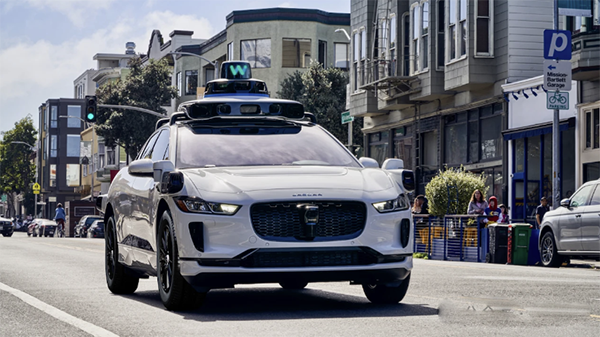
According to foreign media The Register, Micron Technology CEO Sanjay Mehrotra stated following the release of the latest quarterly earnings report that as automakers launch vehicles equipped with Level 4 autonomous driving capabilities, cars will ultimately require more than 300GB of DRAM memory.
Micron reported revenue of $23.86 billion for the second quarter of fiscal 2026, surging 196.4% year-on-year and 74.9% quarter-on-quarter. This substantial growth continues to be driven by massive demand for high-end HBM chips from hyperscale AI enterprises, combined with structural supply constraints and Micron's strong execution across all areas.
Currently, Micron is constructing multiple wafer fabs simultaneously in Japan, Singapore, and the United States to meet the continuously growing enormous demand for memory from AI data centers. Most of these projects are scheduled to commence production between 2028 and 2029.
Micron CEO Sanjay Mehrotra indicated plans to increase production output by 20% in 2026, which may help alleviate supply-side pressures. However, even as these new fabs begin production, in addition to addressing the rapidly rising demand from AI data centers, Sanjay Mehrotra forecasts the emergence of a new market requiring large volumes of high-speed storage—autonomous vehicles, particularly Level 4 vehicles that require no human intervention.
Currently, NVIDIA, a leading global provider of AI and automotive chips, is collaborating with numerous automakers to accelerate the deployment of Level 4 autonomous driving systems, which demand extensive high-speed memory.
Most modern vehicles today require at least 16GB of memory, but significantly more will be necessary once automakers introduce Level 4 autonomous driving. Compared to mainstream current L2++ advanced driver-assistance vehicles, Level 4 systems typically feature far more sensor configurations, including LiDAR, cameras, and millimeter-wave radars. This directly drives a massive surge in data processing: the volume of data a vehicle needs to process per hour has skyrocketed from approximately 25GB to as high as 19TB. Such enormous data processing pressure is forcing the industry to restructure the underlying computing architecture for physical AI, resulting in rapidly growing demand for memory capacity.
Drawing an analogy, high-end Mac computers with powerful on-device AI capabilities feature up to 512GB of unified memory, enabling them to run popular models like OpenClaw locally. This far exceeds the typical memory configurations (24GB to 64GB) currently found in some Level 4 autonomous vehicles. Micron believes that with the continued advancement of autonomous driving technology, memory requirements per vehicle will ultimately surpass 300GB.
Therefore, if automakers begin mass-producing hundreds of thousands or even millions of vehicles equipped with AI-powered Level 4 driverless functions, Micron expects demand for memory in these autonomous vehicles to grow at a rapid pace.
(Reprinted from https://news.eccn.com/)