On August 29, the "2025 Vehicle Export Certification Engineer Workshop", hosted by TÜV Rheinland Greater China (hereinafter referred to as "TÜV Rheinland")—an international independent third-party testing, inspection and certification organization—was successfully held in Shanghai. Focused on enhancing the core capabilities of professionals in the field of vehicle export certification, this workshop attracted active participation from certification and regulatory experts of many domestic original equipment manufacturers (OEMs) and relevant industry institutions. It aims to help enterprises address global market access challenges and improve export competitiveness through systematic training and practical empowerment.
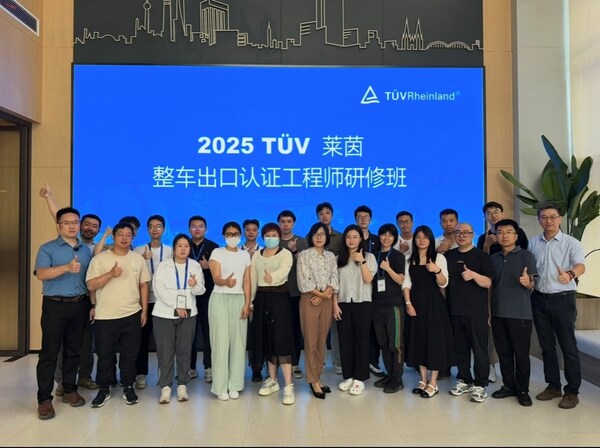
Currently, the global automotive industry is accelerating its transformation towards electrification, intelligentization, and connectivity, and automobile export trade has become a key battlefield for competition in the global automotive market. However, global market access requirements are increasingly complex, and regulatory authorities are imposing stricter reviews on vehicle product certification. The certification cycle and implementation efficiency have become decisive factors for enterprises to successfully enter overseas markets and seize market opportunities.
The certification engineer workshop, carefully designed by TÜV Rheinland, features 3.5 days of systematic course lectures and typical case analysis. It helps participants comprehensively build a knowledge system for export certification, consolidate their basic understanding of the EU regulatory framework, and develop in-depth comprehension and interpretation capabilities for core content modules. Participants not only mastered the integrity requirements for document preparation required for certification, improved the efficiency of internal organizational communication and coordination, but also enhanced their risk early-warning awareness before vehicle products are launched, and gained a deep understanding of relevant regulatory requirements for market supervision. This training will effectively help participants further improve the overall management capabilities and delivery efficiency of certification projects in their future work, whether they perform tasks independently or lead teams.
The course content covers six core modules: fundamentals of EU/UN type approval; in-depth interpretation of Regulation (EU) 2018/858 (EU vehicle type approval framework regulation) and the new Regulation (EU) 2019/2144 (general safety regulation); export certification project and quality management; production conformity and market supervision requirements; market policies, regulations and access requirements; and the development and practice of UN-R155/R156/R171 regulations and European intelligent driving regulations. Participants who passed the assessment after the course were awarded personal qualification certificates by TÜV Rheinland, providing strong support for their career development.
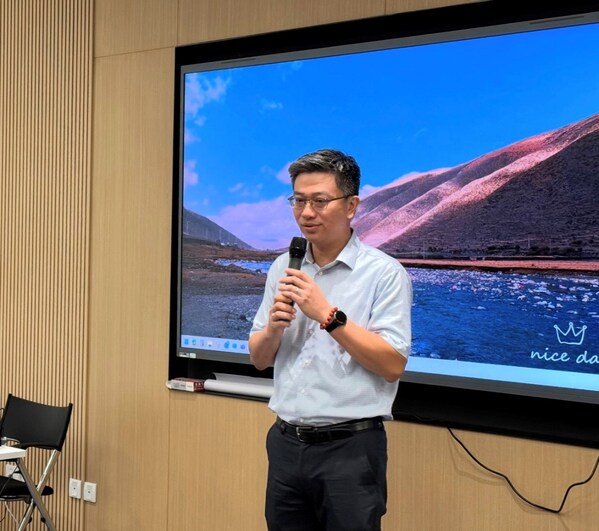
In his opening speech, Huang Yuxin, Senior Vice President of Transportation Services at TÜV Rheinland Greater China, stated: "TÜV Rheinland has accumulated over a century of professional technical experience in the automotive field and established in-depth cooperative relationships with hundreds of automakers worldwide. We are well aware that the professional capabilities of certification engineers are key for enterprises to break through technical barriers and win in the international market. Through this training, we integrate theoretical explanations, case discussions and interactive Q&A to help participants build a complete knowledge system and improve their regulatory practice capabilities, injecting professional momentum into the high-quality export of automotive products." In the future, TÜV Rheinland will be guided by cutting-edge industry insights, continuously optimize the course system, build a benchmark platform for the development of automotive export certification talents, and provide high-quality professional talents for more automotive enterprises and industrial chain partners.
(Reprinted from China Grid https://news.eccn.com)