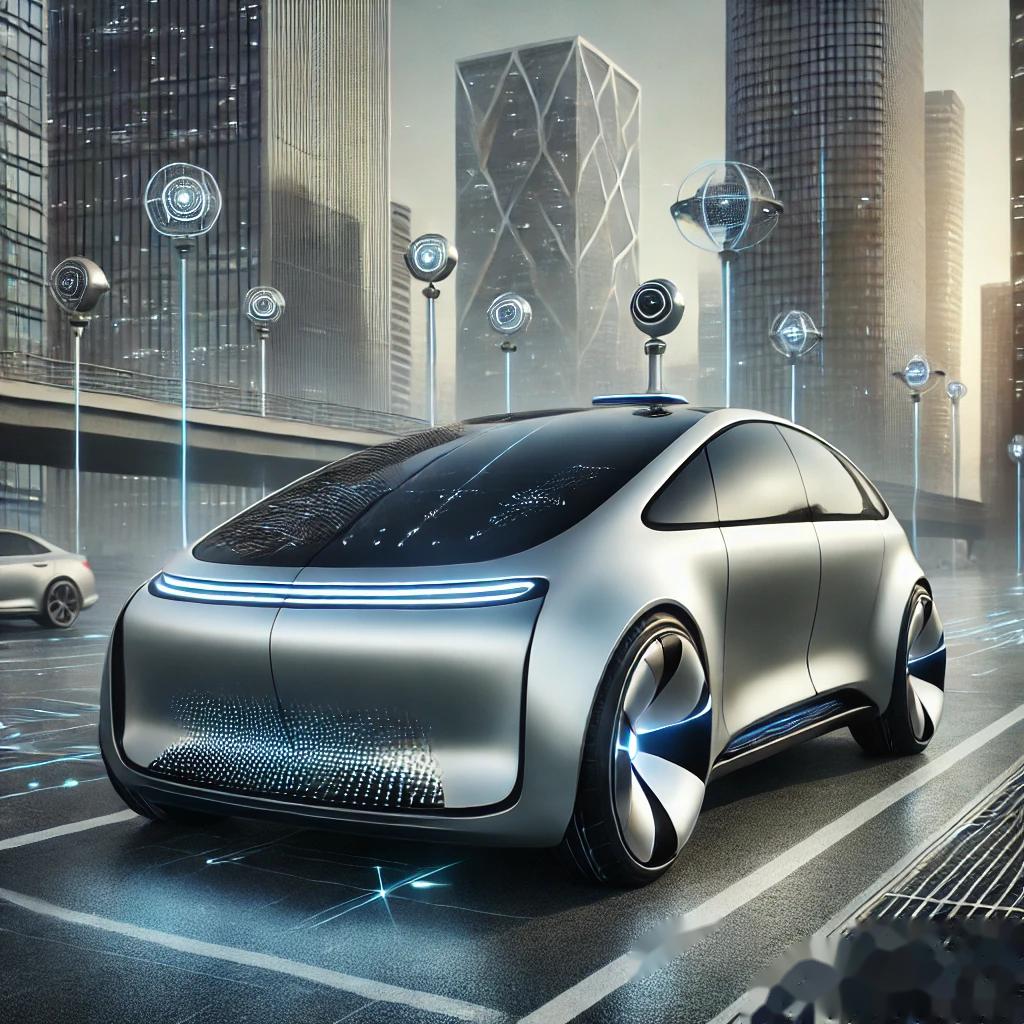
The intelligent and connected process of smart cars can't be separated from IC hardware. Power control IC can precisely regulate the vehicle's motor, engine and other power systems, optimize energy consumption and power output, and improve driving performance. In the field of autonomous driving, sensor fusion IC can integrate data from multiple sensors such as lidar and cameras to achieve environmental perception and target recognition; decision-making control IC, based on perception information, can quickly make path planning, braking and other decisions to ensure the safety and efficiency of autonomous driving. At the same time, vehicle networking IC supports data interaction between vehicles and clouds, and between vehicles and vehicles, to promote the development of the smart traffic ecology.
In the transformation of new energy vehicles, the motor control chip is the core. Take the motor control system of Tesla cars as an example, the dedicated motor drive chip can accurately control the speed and torque of the permanent magnet synchronous motor. When the driver steps on the accelerator pedal, the chip responds quickly, adjusts the motor output power according to the depth of the pedal and the vehicle status, to achieve a smooth acceleration of the vehicle, and can also recover energy during braking, improving the range.
In the chassis control system, the body stability control chip is indispensable. The body stability control module chip provided by Bosch for automakers can monitor vehicle status in real time. When there is a risk of skidding or tail sliding, it quickly adjusts the wheel braking force to assist the driver in stabilizing the vehicle and ensuring driving safety in rainy and snowy weather and sharp turns.
In the field of autonomous driving, sensor fusion chips are crucial. On intelligent vehicles (equipped with lidars, cameras, and millimeter-wave radars), these chips can integrate data from multiple sensors. For example, Mobileye's visual processing chip combines camera images with millimeter-wave radar range data to construct a 3D environmental model around the vehicle, identifying vehicles, pedestrians, road signs, etc., to provide a basis for autonomous driving decisions. Decision control chips, based on environmental information, quickly plan driving paths and issue instructions for acceleration, braking, and steering. For instance, during high-speed autonomous driving, the decision control chip can automatically adjust the vehicle's speed based on the distance to the vehicle in front, and plan a safe trajectory when there is a need to change lanes.
On the connected vehicle front, the in-vehicle communication chip turns cars into "smart terminals". High-tech's in-vehicle 5G communication chip supports data interaction between vehicles and the cloud, vehicles and vehicles (V2V), and vehicles and infrastructure (V2I). In smart traffic scenarios, vehicles receive traffic signal status information through this chip, plan crossing strategies in advance; they can also share speed, location data with surrounding vehicles, warn of collision risks, and improve traffic efficiency and safety.